History
first generation apple growers
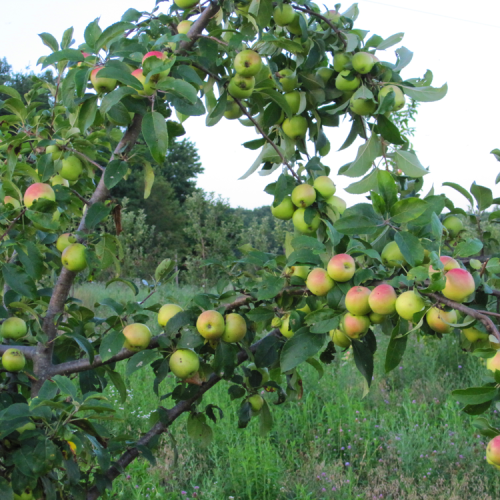
Kordick Family Farm is a mother-daughter operation that was founded in 2009, when we planted our first 850 apple trees in Stokes County, NC. We primarily grow heirloom, regional, and cider apple varieties, with several grafted from local sources.
At a time when most commercial orchards are moving towards high-density dwarf variety plantings of trees, our MM111 semi-dwarf trees…
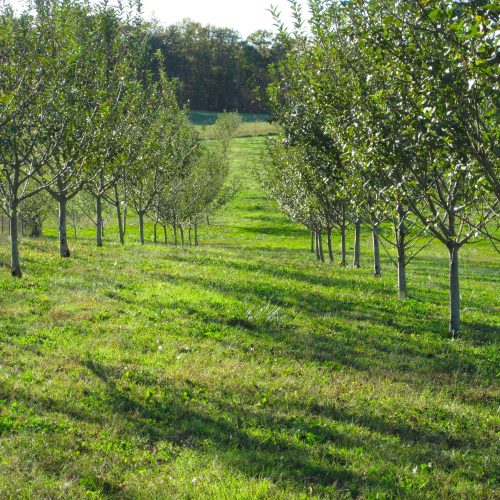
…are huge by current standards, the kind of tall, sprawling trees that used to be the norm in American orchards. Growing to about 20 feet high and spaced about 16 feet apart, they require ladders to pick the fruit, but aesthetically, we just like big apple trees that you can climb in, as well as the idea that they will be here long after we’re gone. And practically-speaking, our large trees are much more hardy and self-reliant than dwarf varieties, which is always a plus in a two-person operation.
In recent years, we have expanded our apple orchard to include about 1,800 trees total, representing about 175 different apple varieties. We still graft every single apple tree we plant. We also have a small pear orchard and handfuls of other fruits, including peaches, plums, figs, che fruit, and blackberries, planted on the farm. In coming years, we will be expanding our pear planting, and are always interested in adding more tree fruits (some familiar, and some quite exotic) into the mix.


Heirloom
Our Apples
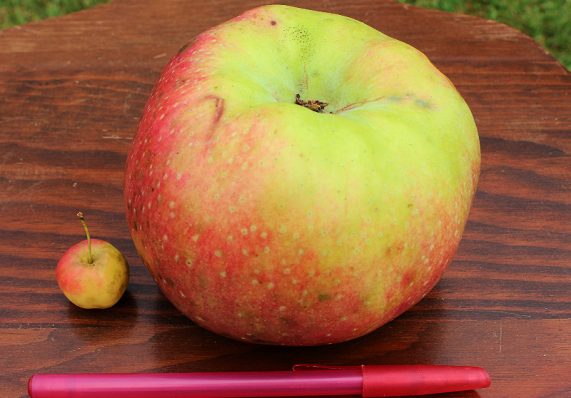
We currently grow about 200 different heirloom apple cultivars, consisting of cider varieties from around the world, Southeastern regional favorites, as well as New England classics. It sounds like a lot of varieties, and it is by modern orchard standards, but there are actually thousands of apple varieties in existence. Sorry, you won’t find any Honeycrisp or modern trademarked apples in our orchard!
You will find these varieties, however . . .
Alexander
Almata
American Golden Russet
American Pippin
American Summer Pearmain
Anise Russet
Antonovka (3 cultivars from Walden Heights)
Api Etoile
Appomattox Golden Sweet
Airlie’s Redflesh
Arkansas Black
Arkansas Sweet
Aroostock Sunset
Ashmead’s Kernel
Atkins Crab
Aunt Cora’s Yard Apple
Baba Yaga (unknown from KFF, probably named variety)
Baldwin
Ben Davis
Benham
Benoni
Bevan’s Favorite
Black Gilliflower
Blacktwig
Blue Pearmain
Blue Ridge King
Bryson’s Seedling
Buckingham
Bulmer’s Norman
Bramley’s Seedling
Brushy Mountain Limbertwig
Buff
Burford’s Redflesh
Calville Blanc d’hiver
Calvin
Cannon Pearmain
Carter’s Blue
Centennial Crab
Chenango Strawberry
Chestnut Crab
Chimney Apple
Christmas Delight
Cinnamon Spice
Claygate Pearmain
Cole’s Quince
Cornish Gilliflower
Cotton
Cox’s Orange Pippin
Crispin (from Haight’s)
Crittenden Crab
Dabinette
Denniston Red
Detroit Red
Devonshire
Dolgo Crab
Domaines
Dorsey
Duchess of Oldenburg
Early Harvest
Esopus Spitzenburg
Fallawater Pippin
Fameuse
Father Abraham
Fillbarrel
Florina
Fox
Foxwhelp (nope, Fauxwhelp)
Gano
Geneva Crab
Giant Tart Summer Frying Apple
Gilpin
Gnarled Chapman
Golden Harvey
Golden Pearmain
Grady’s Fave
Green Gravenstein
Grimes Golden
Harrison
Hawaii
Hewe’s Crab
Hightop Sweet
Honey Cider
Horse (3 different sources)
Hubbardston’s Nonesuch
Hunge
Malus hupehensis aka Chinese Tea Crab
Hurlbutt
Husk Sweet
Hyslop Crab
Ingram
Inman Crab
Joyce Acres Black (unknown from KFF, probably named variety)
Joyce Acres Yellow (unknown from KFF, probably named variety)
July Tart
Junaluska
Keener Seedling
Kidd’s Orange Red
King David
King Luscious
Kingston Black
Lady
Liberty
Lowry
Loyalist
Maiden’s Blush
Magnum Bonum
Mammoth Blacktwig
Mary Reid
May
Melanie
Michelin
Milam
Mill Rose
Myer’s Royal Limbertwig
Newtown Pippin
Nodhead
Northern Spy
Nutmeg
Old Gold
Old Nonpareil
Pilot
Pink Pearl
Pomme Gris
Porter
Priscilla
Ralls
Red Astrakhan
Redfield
Red Gravenstein
Red Limbertwig
Rhode Island Greening
Rockingham Red
Rose Blush Sweet Crab
Royal Limbertwig
Roxbury Russet
Rustycoat
Sargent Crab
Shockley
Slovianka
Smith’s Seedling
Smokehouse
Stayman’s Winesap
St. Edmund’s Pippin
Stoneville Crab
Summer Banana
Summer King
Sunday Sweet
Swaar
Tarbutton
Tenderskin
Terry Winter
Tolman Sweet
Tompkin’s County King
Tremlett’s Bitter
Vandevere
Vilberie
Virginia Gold
Virginia Beauty
Virginia Winesap
Wagener
Wealthy
Western Beauty
Westfield Seek No Further
Whitney Crab
White Jersey
Wickson Crab
William’s Favorite
Wine
Winecrisp
Winter Banana
Wolf River
Yankee Sweet
Yarlington Mill
Yates
York Imperial
Yellow Gravenstein
Yellow Transparent
Zabergau Reinette

Baba Yaga
Baba Yaga's Apples of Eternal Youth story
The first members of our family to emigrate from Russia to the United States came in the early 1900’s by way of Ellis Island. They settled in a Northeastern mill town and eventually started a small dairy and subsistence farm. Some of the fruit trees they planted still stand on the old homestead, and while the first Kordicks in this country became proud Americans, they also left behind an appreciation for certain Old World customs and folklore that our family continues to enjoy today . . .
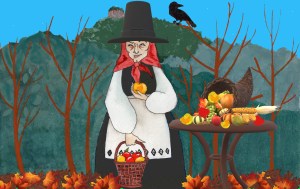
Every culture seems to have a bogeyman of sorts that is held over the heads of misbehaving children, and in Russia and several other Eastern European countries, children were raised to beware lest Baba Yaga, a rugged forest witch, seize them and gobble them up. Baba Yaga features in many famous Russian stories, often as a fearsome antagonist, yet she is also frequently portrayed as simply a wise old woman (or women, as she also may be depicted as three sisters) of the woods who serves as a guide to the heroes and heroines of folklore.
Like many apple growers of the last century, we have deliberately branded our apples with an eye-catching logo and artwork. 20th Century fruit crate labels are now collectibles, sought after for the evocative art that was meant to catch consumers’ eyes on city streets and entice them to gravitate towards one grower’s fruits over another’s.
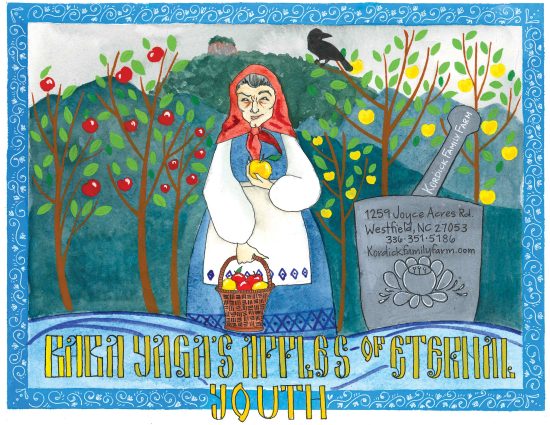
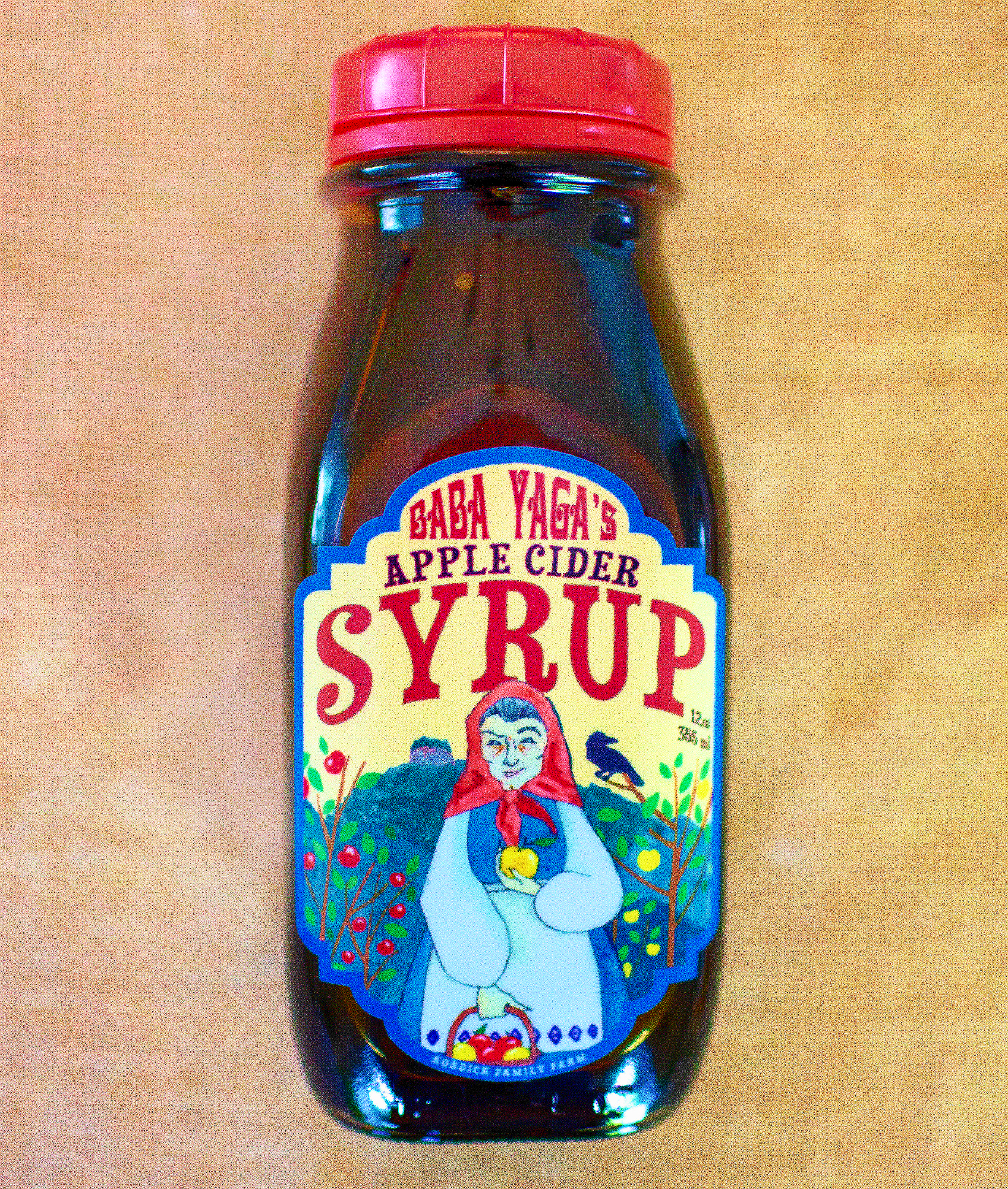
There is a Baba Yaga fairy tale about a quest for golden apples that bring eternal youth to those who possess them, and it was this story that inspired us to stylize our apples as “Baba Yaga’s Apples of Eternal Youth,” and to come up with our own version of the story, as well as revive the old fruit crate label tradition.
We worked with Greensboro-based artist Liz McKinnon (www.heartshinestudios.com) to design a watercolor illustration of Baba Yaga with the famed apples, not in Old World Russia, but in our neck of the North Carolina foothills. As the crow flies, Kordick Family Farm is about 15 minutes north of Pilot Mountain, and we have a postcard view of the knob from the center of our property. To our west lie the Blue Ridge Mountains, while the Sauratown range borders us to the east. The Dan River is mere minutes away to the south of the farm.


HANDMADE
Our Apple Cider Syrup
It takes a long time for large apple trees to start bearing fruit, period. And if you’re trying to grow apples in the Southeast, it takes an even longer time to hit upon the right mix of practices to produce fruit of consistently high quality. This means we’ve had a lot of time to think about what we want to do with our apples, and smaller quantities of fruit to play around with. In this manner, we created our flagship product: Baba Yaga’s Apple Cider Syrup.
Much like hard cider, apple cider syrup was …
…an American staple in past centuries, a stable, homegrown sweetener that had endless uses. However, with the advent of granulated sugar (and probably also due to the widespread razing of American apple orchards during Prohibition), cider syrup all but disappeared from the pantry.
When we became interested in re-introducing cider syrup, we sought out the local Southern experts: sorghum syrup producers. A very generous, close-knit community, our new friends taught us the sorghum syrup-making process and helped us adapt it to cider syrup.
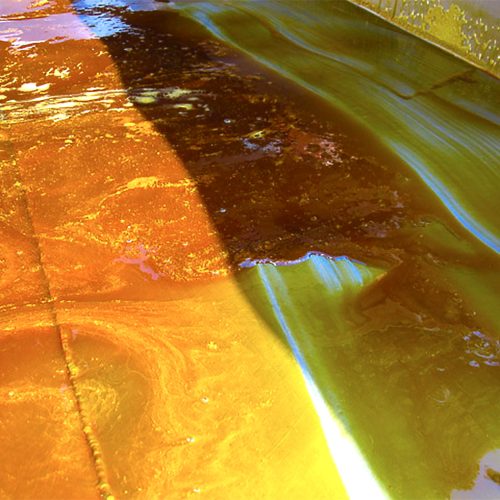
Starting with 100% farm-pressed apple juice (cider), we boil enormous pans over a wood fire for hours until it is reduced to about 1/10 of the original volume. At this point, the sugars have concentrated to form a thickened syrup that is wonderfully fragrant and tangy in apple flavor, and is ready for . . . almost anything.
Really. It is actually easier and infinitely quicker to list the things that cider syrup wouldn’t be good on (Fish? Well, some fish. It’s actually wonderful on salmon!). The most obvious, and hard-to-beat, application is to pour cider syrup over pancakes, biscuits, and other breakfast pastries. Perhaps the most unexpected use, however, is to make a braise or sauce for savory items like pork roast or sweet potato gratin/casserole. It even pairs well with salads in the form of a vinaigrette. Try drizzling it over ice cream or yogurt, spoon it on top of oatmeal, add it to popcorn . . . Beverage-wise, you can make an instant cup of hot cider by adding about 4 Tbsp (or to taste) cider syrup to a cup of hot water. Add a shot of brandy or rum to your cup, or add cider syrup to any number of cocktails and mixed drinks. Finally, cider syrup can be used in baking, much like maple syrup.
Apple cider syrup is a staple that never should have left the American kitchen.
To purchase Baba Yaga’s Apple Cider Syrup, please visit our online Etsy store or contact us to set up a time to pick up from the farm store. If you’re not close by and would prefer to pay by check, rather than go through our online store, we’d be happy to ship directly to you, and you can contact us with your information.

HOLISTIC
our growing practices
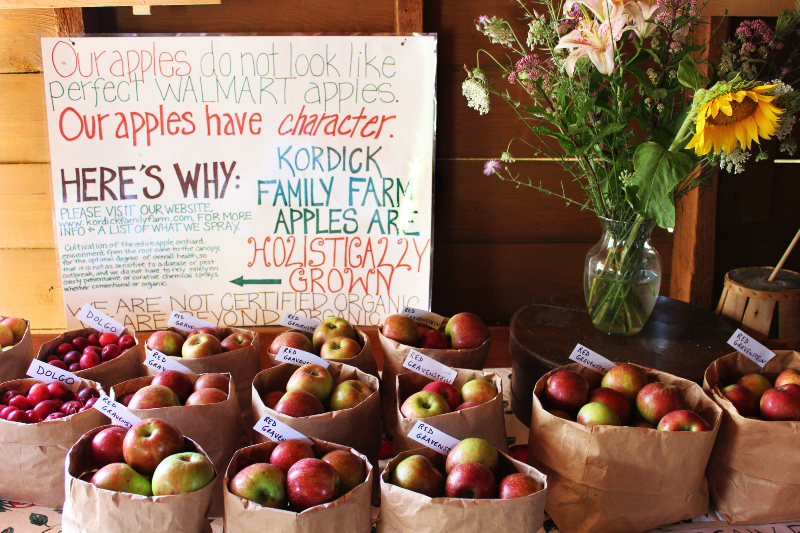
Like many unconventional farmers, we have struggled to find a term that describes our growing practices, while also communicating in a single word our management philosophy to consumers. ‘Natural’ and ‘sustainable’ mean nothing without context. ‘Low-spray’ can be used by growers who spray conventional chemicals, but at their lowest possible application rates. We are Certified Naturally Grown, and most of the materials we apply are listed by OMRI (the Organic Materials Review Institute), however, use of the term ‘organic’ implies certification, which we are not currently. We are beyond organic at this point in our growing careers, and have finally settled on the term, ‘holistic,’ in the sense championed by Michael Phillips and the Holistic Orchard Network, of which we are proud members (http://www.groworganicapples.com).
Over the years we have found the most widely available commercial formulations of organic chemicals tend to have one thing in common: it’s not so much that they work well against pests and disease and truly promote good crop health; more so, it’s that they do no harm. Low efficacy coupled with premium price tags just doesn’t cut it on our farm, and after losing apple crop after apple crop in spite of our diligent lockstep organic program, we decided we needed to find a better way to grow. We think we’ve found it. To large extent, we have stopped thinking like conventional and conventional organic growers, who are mostly concerned with preempting pest and disease pressure with preventative chemical sprays, as well as responding with curative formulations once pest and disease pressure is in evidence.
Instead, we focus on cultivating trees, and indeed, an orchard environment, of such optimal overall health that it is not as sensitive to a disease or pest outbreak, not unlike a person who eats healthy, doesn’t try to sterilize everything in sight, but maintains good hygiene, and thus is much less likely to be laid up by the latest bug going around. To that end, we nurture the root zone environment with inputs like hay and wood chips to promote a healthy fungal ecosystem that gives tree roots access to all manner of good nutrition. We also regularly apply beneficial microbes, along with fatty oils for them to feed on, to promote canopy colonization by species that work symbiotically with the tree, again to the end of excellent nutritive uptake, while also taking up space that might otherwise be “infected” by “bad” bacterial species that cause disease. And as we transition to this new way of growing, we do spray the occasional broad spectrum knockdown like copper or PerCarb, though not anywhere near as often as we did in the past, and for different purpose. Using the aforementioned chemicals as an example, when we come in and sanitize the fungal and bacterial populations with a tree spray, we don’t leave it that way and then try to maintain a sterile environment with regular subsequent sprays. What we want is to start with a clean slate for an application of beneficial microbes and to nurture this population for as long as possible. It’s all about using your tools wisely, and as it gets harder and harder to grow fruit period, we need an effective grower’s toolbox.
This is not our great-grandparents’ farmstead orchard. In the early and mid 20th Century, they simply did not have the disease and pest pressures that have spread with globalization. Also, people back then did not put quite so high a premium on fresh fruit appearance. Nowadays there are so many potential and wide-ranging issues to worry about it makes our heads spin. Unsurprisingly, the West Coast of the United States is a much more ideal environment for growing apples in general, and organic apples in particular. Plum curculio, one of the hardest pests for organic East Coast growers to control, doesn’t occur in the western half of North America, and until recently, fireblight, a devastating bacterial disease on the East Coast, wasn’t an issue either. Throwing in the endemic fungal disease smorgasbord of the humid South makes it especially tricky, to say the least, for apple growers in the Southeast who are trying to maintain a remotely organic orchard.
A lot goes into orchard management. As mentioned above, we mulch with hay whenever possible for weed suppression and cultivation of a healthy root zone. We utilize untreated trap crops and sacrifice the fruit to certain pests in the hope that it prevents them from entering the orchard proper and causing damage. We collect fallen apples and diseased prunings for burning so they don’t serve as vectors for future pest and disease development. In short, we do everything we can to reduce the need to spray — indeed, it’s a rare grower who is enthusiastic about spraying anything. Whether you’re spraying conventional or unconventional nutrients, pesticides, fungicides, herbicides, or even beneficial bacteria, it’s a time-consuming, fuel-eating, equipment-wearing hassle, and often a very expensive and potentially dangerous one. If a farmer is spraying anything, it’s because he or she truly thinks their crop and livelihood depends on it. Talk to us — most farmers would love a chance to have an honest discussion about growing practices rather than be bound by the are-you-organic-or-not litmus test.
Organic chemicals and materials can be abused as much as conventional ones, can be just as bad for pollinators, and can also accumulate to the detriment of the environment. In addition, decreased efficacy often means increased application. You can go out of your way to avoid synthetic chemicals derived from fossil fuels, but if you have to spend more time on your tractor burning fuel and compacting the soil in order to apply them, is that sustainable? Rather than lecture you on our definition of sustainability, we will keep an updated list on this website of what materials we use in our orchard and why, as well as this discussion of practices, as it evolves, and you can decide for yourself if this meets your definition of sustainability.
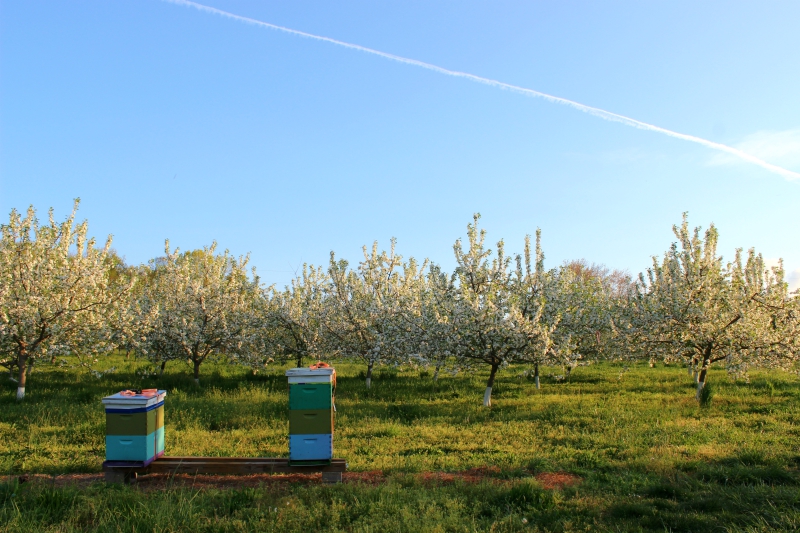
We maintain mason bee houses in the orchard, as well as honeybees and pastured rabbits. If we wear any safety clothing/masks while spraying, it’s generally to keep from getting soaked and cold and filthy. We don’t spray anything that we consider unsafe to our bees, livestock, or ourselves. For the 2025 growing season, we will be deploying:
fruit bags: from Clemson University, our only domestic source of paper fruit protection bags; it’s a lot of work, but we love bagging some of our most problematic apple varieties to provide a physical barrier against pests, diseases, deer, hail, sunburn, you name it. We highly recommend these bags for homeowners who want high quality fruit without management hassle throughout the season. Literally, lightly waxed, thin, white paper bags with a tiny wire to hold the bag closed over the apple. We burn the bags in our woodstove for firestarter in the winter.
Delta insect monitoring traps: we hang Delta sticky traps in the orchard at the beginning of the orchard and add various insect pest pheromones and plant compounds to attract pest species we’d like to monitor for IPM (Integrated Pest Management) purposes. If numbers stay below a certain threshold, we know we don’t need to take action to control a pest, but if they do cross the threshold, we can better pinpoint our control measures to suit population numbers and life stages.
Circle plum curculio traps: an ingenious trap constructed of screen, a plastic funnel with collection chamber, wood, and some twine. We tie these traps around “trap” trees and our historically worst curculio-afflicted trees and bait them with plum essence and wintergreen oil to entice curculio adults in, then check daily to squash curculio and release “bycatch” insects
Isomate CM/OFM mating disruptors: we hang these OMRI-listed dispensers in our trees before bloom; they are laced with Oriental Fruit Moth and Codling Moth pheromones and overwhelm the male and female moths, preventing them from finding each other and mating
Madex HP: Cydia pomonella, an OMRI-listed granulovirus that is super-specific to Codling Moth and Oriental Fruit Moth; we apply this in blocks where mating disruption wasn’t enough to prevent high populations of OFM
Regalia: OMRI-listed, this Giant Knotweed Extract formulation activates ISR (or induced systemic resistance) in a plant to help strengthen its natural defenses during times of stress, high disease risk, etc.
Romeo: an OMRI-listed derivative of everyone’s favorite yeast, Saccharomyces cerevisiae (used to make wine, beer, and cider), consisting of “cerevisane,” the cell walls of S. cerevisiae. Used to stimulate an ISR (induced systemic resistance) response in the trees pre-disease event, so they react early and strongly when pathogens strike.
AgriPhage: OMRI-listed, contains bacteriophages that specifically target the bacterium responsible for fireblight. After several years of steadily increasing fireblight pressure in the orchard, we have finally found a biological product that can make even the worst shoot blight take a seat on the bus like everybody else.
Core Holistic Spray: a rotating cocktail applied four or more times a growing season for nutrition and disease/pest prevention, including some or all of the following — TerraNeem (OMRI-listed neem oil formulation; also used for spring “fatty acid knockdown” spray), Ferti-Organic karanja oil (OMRI-listed), Spectrum beneficial microbes (OMRI-listed), MaxiCrop soluble seaweed powder (OMRI-listed), AEA Micropak trace minerals (OMRI-listed), blackstrap molasses (OMRI-listed), Ecos (a “plant-powered” dish soap that we use to help emulsify the brew components)
Isomate mating disruptors: OMRI-listed dispensers that are hung from tree canopies to release mating pheromones of Oriental fruit moth and codling moth to make it harder for adults to find each other and reproduce within the orchard.
Lime Sulfur: OMRI-listed, but our least favorite thing in the world to spray! It is very caustic and can cause severe corrosion on equipment and our persons (burns), but it is very useful when severe broad-spectrum disease clean-up is needed in the orchard during dormant season. Can also be used as to thin blossoms during bloomtime, but of course, it also kills beneficial fungi and bacteria. For that reason, it is often used pre-beneficial biological applications to create a blank slate to start from. We will be applying it in late fall post-harvest to prevent Neonectria ditissima (European Apple Canker) cankers from spreading in our trees after a few bad years.
Blossom Protect/Buffer Protect: OMRI-listed strains of Aureobasidium pullulans that provide protection against early season fireblight by colonizing blossoms in a prophylactic manner and creating an inhospitable environment for fireblight-causing bacteria by acidifying the blossom interior.
Serenade ASO: OMRI-listed, Bacillus amyloliquefaciens (formerly classified as Bacillus subtilus) that colonizes the tree canopies to prevent fungal pathogen infection via several modes of action
Stargus: an OMRI-listed rhizobacterium (Bacillus amyloliquefaciens) that colonizes the tree canopies to prevent fungal pathogen infection via several modes of action
Howler: an OMRI-listed Pseudomonas chlororaphis formulation that provides preventative control against fruit rot pathogens via several modes of action.
Nufilm: an OMRI-listed, pine resin-derived spreader-sticker that we sometimes add to our spray tank mixes if we know rain is coming. Also provides some protection to UV-sensitive biologicals.
Biodynamic Tree Paste: an OMRI-listed biodynamic preparation from the Josephine Porter Institute, containing bentonite clay, Pfeiffer BD field spray, Equisetum tea, etc. We like to have this on hand to treat any disease cankers or physical damage on our trees.
BotryStop: a live spore preparation of a non-pathogenic saprophytic fungus (Ulocladium oudemansii (U3 Strain). This OMRI-listed sap fungus is particularly aggressive at colonizing dead or dying tissue, and we’ve started applying it after bad fireblight or nectria dieback, as well as to pruning cuts, to prevent pathogens that favor dead tissue from establishing
Nitryx: an OMRI-listed nitrogen-fixing bacteria that we inject into the soil beneath the apple trees. Paenibacillus polymyxa P2b-2R colonizes the apple roots and fixes nitrogen from the atmosphere to increase the amount of plant-available N in the soil.
Surround: that “white stuff” you see covering the trees of organic orchards is just OMRI-listed kaolin clay! When applied to the canopy, the clay effectively scatters the sunlight hitting the trees’ leaves, reducing sunburn to fruit and heat stress to the tree in general. Too much trouble to apply to the orchard at large, but we use it in a couple of our varietal blocks most susceptible to heat damage.
Endomycorrhizal Inoculant: OMRI-listed endomycorrhizal fungus species in micronized powder form; we can dilute this in water to make a root dip for trees and transplants to get them off to a great symbiotic start with beneficial fungi partners
Blend Magic 40% Vinegar: non-synthetic concentrated vinegar allowed by OMRI for burndown treatment of weeds. We apply it as needed before putting down hay mulch between our apple trees.
Allganic Nitrogen Plus (15-0-2): an OMRI-listed Chilean nitrate we applied sparingly to adjust areas of the orchard low in nitrogen
Got questions or concerns? Check out our contact info further down on this page and drop us a line.
Plum curculio will be our pest of the month in perpetuity. Ah, April, when the early apple trees enter petal fall stage, fruitlets begin to develop . . . and plum curculio (Conotrachelus nenuphar) rears its ugly, little head. Plum curculio may be tiny, usually only a quarter of an inch or less in length, but it causes bigtime damage in Eastern fruit orchards every year. There are many growers who are organic in every way, save the exceptions they make to combat plum curculio. A hard-bodied, extremely tenacious weevil, its modus operandi is to overwinter in the woods surrounding orchards, then move into the orchard proper at petal fall with the goal of laying as many eggs as possible in developing fruits.
The larvae develop inside the fruitlets, causing damage one of two ways: 1) the larvae fully develop, secreting certain chemicals that make the fruitlet drop to the ground, where the grown larvae can penetrate the soil to complete the life cycle, or 2) the larvae may be crushed to death as the young fruitlet grows rapidly, leaving the initial damage from the egg deposit as a gateway for other pests and diseases. Either way, they are a major, major headache that growers have been battling for a century or more. There are neat photographs of early twentieth century growers out with large teams, literally beating the trees to shake the curculio adults onto sheets spread below the trees, to be removed from the orchard for certain destruction.
The key to controlling plum curculio is stopping the population cycle — you want to reduce the number of egg-laying adults that you will have to combat the next year, so most of the time, you’re actually targeting the larvae themselves in a number of ways.
We have planted trap crops of early-fruiting plum and peach trees so we can sacrifice the fruit to the plum curculio and target the larvae before they move into the later-fruiting apples. Sound theory, but it doesn’t always work so well since, in this area, cold springs often preclude peach, and especially plum, fruitset. So most of the plum curculio probably make it past the trap crop in any given year to the orchard proper.
The next line of defense is to apply coats of refined kaolin clay to your trees. The clay particles slough off onto curculios making their way into the trees, getting into all their orifices and irritating them. The idea is to convince them that our apple trees are just not worth the pain and suffering. But in order to be effective, kaolin clay has to be applied in a heavy and consistent enough layer, easier said than done around bloomtime, when growers are busiest and the weather is rainiest (the clay will wash off in rain, so many layers are required).
So historically, many adults do succeed in their raison d’etre, to deposit their eggs under the skin of our new apples. But we still need to target the larvae in order to prevent a larger repeat of this whole cycle the next year. Parasitic nematodes can be applied to the soil beneath trees, where they will happily gobble up plum curculio larvae after they penetrate the soil. We’ve tried this in the past and may again in the future, but for now, rely on Circle traps around the trunks of orchard perimeter trees to catch early season adults walking into the orchard each spring.
Thanks in large part to an NC AgVentures grant, we installed a RainWise weather station at the orchard in winter 2021. Having such site-specific weather data at our fingertips will help us make better management decisions. And since our information is public, local gardeners and growers can also benefit.
Check out our current weather conditions via our RainWiseNet webpage!
Check out our local pest and disease forecasts via our NEWA (Network for Environmental and Weather Applications) webpage! (Select “Westfield” from the drop-down weather station list.)

CURRENT EVENTS

Winter Work:
This time of the year stands out for some of the most essential, but least glamorous, work of orcharding: soil sampling, pruning, paperwork, planning for the 2026 season, scionwood harvest for spring grafting, general cleanup in terms of sanitation (removing any dropped and diseased fruit), mowing, and mulching with hay in between trees.
It’s a great time of the year to plant trees, so we work on establishing new plantings and plugging any holes where we’ve removed trees. And instead of making a Christmas list, we make a scionwood wish list of varieties we want to add to our ever-expanding lineup and make believe we’ll be able to find a place for them someday!

Fall Tree Sale
Saturday, November 8th, 2025, from 11 am to 4 pm
We’ll have hundreds of heirloom apple and pear trees available for sale in fall 2025, in time for prime planting season! Email us to peruse a list of available varieties ahead of the sale.
At 11 am, we will kick things off with a brief traditional wassail to “bless” the young trees with good fortune ahead of planting.
We will not have any fresh fruit available for purchase this year , but our packhouse store will be open and full of products made from our apples and other orchard fruits.
*As of early December, we still have several dozen trees available for sale! Please drop us a line for current varietal availability and/or to schedule a visit to shop the trees.
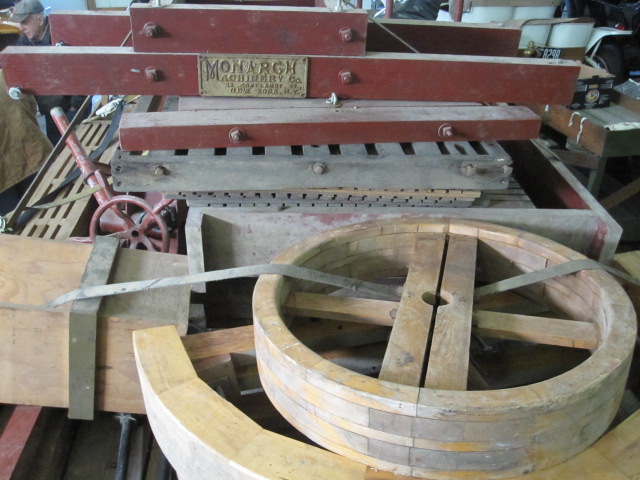
This pile of stuff was once an enormous 100 year-old cider press, and soon it will be again . . . when we find the time and space to get it up and running again. Stay tuned. For now, it’s a sight to see, with all its fascinating nuts and bolts (and massive pulleys) on display in the orchard packhouse.
NEWS FROM THE APPLE BRANCH
We send out a monthly newsletter with farm happenings, heirloom apple histories, recipes, and orcharding insights. To receive “News from the Apple Branch” directly to your email inbox every month via Mailchimp, please subscribe here. Otherwise, you can enjoy elements of our most current newsletter below.


Let the countdown to winter pruning begin! While the cold temperatures sweeping the country this week may not be to everybody’s liking, at KFF we are thrilled about the prolonged cold snap. Our trees need consistently cold temperatures to drive them to dormancy, and we need dormant trees to begin pruning without fear of causing damage to them. Some years, we don’t feel that our trees are fully dormant even in January, especially if we’ve had a warm fall, but we are always chomping at the bit to get going with our pruning work so we can get as much done as possible in the brief period before the trees wake up again, typically the last week of February.
We know a lot of orchardists in this region who start pruning right after Thanksgiving or into December. We wish we felt comfortable doing that, but for us, concerns of cutting branches too early, before their tissues have the protection of dormancy outweighs our desire to get going. While we keep eyes on the long-term forecast and wait for January 1st to roll around, we still have plenty to keep us busy in the orchard, albeit at a more leisurely pace since most of the tasks we have to do this time of year don’t have deadlines beyond spring. ‘Tis the season for some of the least glamorous, but most important, work of the apple year. It’s annual soil testing time, when we gather soil samples from around the farm and send them in for lab testing, so that we know if our soil needs any tweaking in terms of pH, nutrients, or health in general.
It never ceases to amaze us how long it takes to collect our dozens of samples. We choose our sampling sites carefully to make sure that parts of the orchard with distinctly different soil types are well-represented. Depending on the orchard block, trees may be in solid red clay, rocky outcrops, sandy loam, and everything in between. You also have to be sure that you take a good site sample, which involves us sinking our soil collector into ten or more spots within a given area and mixing them for a composite sample that will be truly representative.
Before the weather turned cold and our trees started losing their foliage, we also collected bags of leaves for final rounds of plant tissue and plant sap analysis. We collect leaf samples for testing several times during the growing season, as the information we glean regarding nutrients, Brix, pH, etc., helps to give us a more balanced picture of our orchard health throughout the year when coupled with our soil sample results.
With all this hard science to analyze, thank goodness we’ve found time to enjoy some hard cider! In early October, Brittany traveled to Potter’s Craft Cider in Charlottesville, Virginia to sit for the American Cider Association’s “Pommelier” exam, a certification modelled after the “sommelier” for wine, but relating specifically to hard cider knowledge. Along with seven other cider enthusiasts and professionals, some of whom had travelled from as far as Pennsylvania and Florida to take the exam, Brittany endured an extensive written examination, as well as a series of tastings to test her knowledge of orcharding, cidermaking and cider appreciation. It was a very challenging exam, so she was particularly pleased, after six long weeks of nailbiting, to finally receive word earlier this month that, along with two other participants, she had passed her exam and Kordick Family Farm can now say we have a Certified Pommelier on staff!
While bragging rights and accreditations are always nice, Brittany actually pursued certification with the goal of simply learning more about cider making and appreciation. After all, much of our apple crop is now sold to regional cidermakers, so the more we know about cidermaking and growing the best apples for cider, the better. Around this time last year, Brittany spent some cold winter days studying to pass her Level 1: Certified Cider Guide examination online. (The Certified Pommelier is considered a Level 2 distinction, and in coming years, the American Cider Association plans to roll out additional levels of distinction to test the mettle of cider enthusiasts.)
However, her cidermaking knowledge quest actually dates back even farther, to about two years ago, when Brittany began attending enology (the study of wine and winemaking) and viticulture (grape-growing) courses at Surry Community College (SCC) in Dobson, NC. Cider and pomology programs can be found in jolly old England, of course, and increasingly internationally, as well as in the Northeastern United States, as well as on the West Coast, but other than online classes, there really isn’t anything in the Southeast. What we do have, however, is a premier wine education institution at SCC, less than an hour away from KFF.
Brittany had no idea when she signed up for an Intro to Enology and Viticulture course to learn some winemaking jargon that she’d soon find herself sucked in to all the fantastic learning opportunities to be had via Surry’s wine program. The college is pretty special in that it has a working vineyard and fully bonded winery on site; students provide the labor, and this is the real deal: our Surry Cellars wines are sold at festivals and wine shops throughout NC. Graciously, her teachers have indulged Brittany’s specific interest in cider wherever they can, and since her enology instructor actually has some family history with orcharding and cidermaking, the intersection of wine with cider has worked particularly well.
Brittany credits her SCC wine courses with providing the foundations that enabled her to pass the Certified Pommelier exam, and highly recommends the curriculum to any of our readers with either a hobbyist or professional interest in wine and cider. Many of the classes are offered in the late afternoons and evenings, so are possible to attend around a work schedule. SCC also has a suite of online classes available, so you don’t even have to be a North Carolina resident to take advantage. In fact, spring is when the 8-week Wine Tasting and Introduction to Enology/Viticulture classes are offered online, and these are particularly great options to get your feet wet.
For the Wine Tasting course, a different type of wine is featured for weekly, and students learn how to evaluate each one objectively, in terms of residual sugar, acidity, tannins, and overall balance. You’re also guided through aroma and flavor detection, and all these basic skills will serve you well, even if you’re just somebody who enjoys wine or cider by the occasional glass. If you’re local, you can build up to Grape and Wine Science, Wines of the World, Intro to Winemaking, Wine Production and Analysis, Finishing and Bottling, and so many more exceptional classes under expert tutelage.
And finally, in other news, we don’t quite know how they got here so fast, but apparently, “The Holidays” are coming. If you’re looking for an alternative Christmas tree or otherwise unique gift this year, we do still have several varieties of heirloom apple trees available, and as always, you can find lots of our orchard products, including our KFF mulling spices, available for online ordering and shipping from our Etsy store. If you’ll be in the neighborhood and want to swing by our farm to pick up anything, just call us at 336-351-5186 or email cheers@kordickfamilyfarm.com to set up a time.
In this off-year for the orchard, our Ingram apple trees stood out as one of the few blocks that were loaded with fruit. Those trees haven’t reached full maturity yet, so the overall yield didn’t add up to much, but what limbs the trees have were tightly lined with pretty, red, medium-sized apples. Now we can see why Ingram has a reputation for overbearing, which can result in smaller fruit and/or biennial bearing, where an excessive crop load is followed by a nonexistent one. If we weren’t so delighted to see some trees full of fruit this year, we would have certainly thinned the apples when small to help encourage balanced bearing (we can work on discipline next year).
Ingram is a Midwestern apple that got its start as a seedling planted near Springfield, Missouri. The seeds came from some ‘Ralls’ apples that a man named Lucius Rountree brought from his family farm to share with his neighbors at the nearby Ingram farm. After the Ingrams ate the Ralls apples, a son named Sidney planted some seeds by a fence in a corner of the farmyard, and a seedling tree eventually sprouted there. Sidney Ingram’s brother John, called Jack, took a liking to the little tree and traded his brother a knife for the right to take care of it. Jack dug the tree up and re-planted it in the orchard proper sometime between 1844 and 1855.
When the tree finally began bearing, Jack’s father Martin declared it to be worthless, as the fruit was quite hard and not great for cooking. While Jack was away in California, Martin decided to cut the tree down, but before he could do so, his wife intervened, reminding him that, after all, “It’s Jack’s tree.” (It seems easy to assign the origin of one of the apple’s pseudonyms, ‘Little Jack.’) What saved that original Ingram tree in the long term is its extraordinary keeping ability. Over the winter of 1861-62, soldiers scavenged most of the fruit from the tree, but some apples apparently fell to the ground and were buried under leaf litter and snow. While raking up the leaves under the tree in the spring, Martin Ingram discovered the well-preserved fruit, likely “dark red and solid as a cannonball,” as a future Ingram apple enthusiast described them. Mr. Ingram brought the apples inside to cook, and they passed muster to the extent that he abandoned any pretense of cutting down the tree, and instead, set about propagating it by grafting.
Over time, the Ingram apple trees spread locally to other family orchards, and a nurseryman by the name of Mr. McCracken became the first to disburse trees on slightly larger scale. Reverend David Steele Holman, a nurseryman and the treasurer of the Missouri State Horticultural Society, did what he could to promote the apple, then known as ‘Ingram’s Seedling,’ sending samples to The Horticulturalist, a major national publication at the time. Likewise, a local chapter of a pomological society sent Ingram apples to their parent organization in New York, along with their stated intent to re-name the Ingram apple ‘Palmer’ in honor of the organization’s president. After tasting the apples, Mr. Palmer would have none of it, proclaiming that “The genesis of an apple of such wonderful qualities should maintain its local triditions [sic] and bear the name of its originator.”
By the late 1800s, Ingram was a local institution, and “given the place of honor in the culinary department of the housewife.” Commercial orchards in the regional area had taken note of Ingram and incorporated the variety into their operations. As early as 1899, Ingram apples were being grown successfully in Arkansas, and presumably, farther afield. The variety warranted an entry in the 1905 publication of The Apples of New York, but author S.A. Beach noted that while Ingram ranked favorably in flavor, comparable to ‘York Imperial,’ it had “not yet been sufficiently tested in New York,” and he predicted that since Ingram was so much like its parent, Ralls, it probably was best adapted for warmer, southerly regions.
In the meantime, Ingram remained popular in the Ozarks: by 1914, truly extensive plantings could be found in Greene County, Missouri; the Haseltine Orchards alone boasted 600 acres of Ingram and local agricultural classifieds were full of advertisements for Ingram apples in quantities ranging from a single bushel to a thousand. The Springfield News-Leader, a local paper, noted in 1915 that The Springfield Ice and Refrigerating company considered Ingram apples to be the best keeping of its apple holdings, which included “specimens that were grown in 1913, 1914 and 1915,” all still “in a good state of preservation.” Ingram would remain a regional favorite in the ensuing decades, well into the 1950s.
While Ingram’s claim to fame will always be its phenomenal storage qualities, in recent years it is gaining a reputation as a valued cider apple, as well. Beyond fruit, Ingram has impeccable timing to recommend it in every way. For one thing, it’s a late bloomer in the spring, meaning that it tends to miss most spring freezes. It also ripens fairly late in the season, during the month of October in North Carolina. It does resemble its parent, Ralls, in size, appearance, and taste, but develops more and brighter red color with a lovely pinkish-purple bloom overlaying the surface of the skin. The flesh is firm, like a good late apple’s should be. Ingram also has a reputation for being a particularly disease-resistant apple, and so far that’s what we’ve seen in our orchard, where we have 7 trees growing strong.
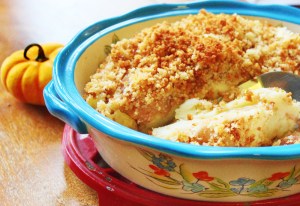
Thanksgiving only whets our appetite for comfort foods, and one of our new favorites is “Kartoffelstock mit Birnen.” Mashed potato casserole with pears sounds a lot cooler in Swiss, doesn’t it? Whatever you want to call it, creamy potatoes and sweet, simmered pears hit the spot on a cold winter night. Apples also work wonderfully, but the pears add something special to this traditional Swiss recipe, and we thought they deserved another shout-out for their great harvest this year. For a distinctly KFF touch, we added some extra pear flavor to the recipe in the form of our pear cider syrup.
3 lb. pears, quartered, stems removed and cored (if pears are large, cut into eighths or large chunks)
3/4 cup water
¼ cup Grandpa Kordick’s Old World Pear Cider Syrup
¼ cup sugar
1 tsp ground cinnamon
1 ½ tsp freshly grated lemon zest
Approximately 8 cups mashed potatoes (made from about 4 lb of potatoes), seasoned as desired
2 cups plain breadcrumbs
1/3 cup butter, melted
Combine pears, water, pear cider syrup, sugar, cinnamon and lemon zest in dutch oven or frying pan with lid. Bring to boil, then reduce heat and simmer, covered, until pears are tender but not falling apart.
While pears are cooking, combine breadcrumbs and melted butter. Set aside.
In a greased 3 quart casserole dish, spread one third of the mashed potatoes. Top with one half of the pears and a few spoonfuls of the cooking liquid. Repeat with one third of the potatoes, remainder of the pears and a few spoonfuls of the liquid. Spread the last third of the potatoes over the pears and top with breadcrumb mixture.
Bake, uncovered, in 350F oven for about 15 minutes to heat through and brown the crumbs.
Note: You can substitute apples for the pears.
Cider Syrup
Recipes
Apple cider syrup is the perfect base for a sweet and tangy barbecue sauce. This full-flavored recipe packs just a hint of heat and makes 2 cups of sauce.
1 cup Baba Yaga’s Apple Cider Syrup
1/2 cup apple cider vinegar
1/2 cup tomato paste
2 Tablespoons grated onion
2 cloves garlic, minced
2 teaspoons fresh grated ginger
2 teaspoons prepared (not dry) mustard
salt to taste
dash of cayenne pepper
Whisk all ingredients together until smooth. Then you know what to do: baste all over your favorite protein and grill, bake, or broil it up.
(adapted from an Our State Magazine recipe and shared by our friend, Randy)
4 Tablespoons (or to taste) Baba Yaga’s Apple Cider Syrup
1 pound Brussels sprouts, trimmed and halved
2 Tablespoons olive oil
1/2 teaspoon salt
pepper to taste
1 large, decent apple, peeled, cored, and cut into cubes
(the original recipe calls for Granny Smith or Honeycrisp apples)
Preheat oven to 400°. In a large mixing bowl, toss Brussels sprouts with olive oil and season with salt and pepper. Spread on a parchment-lined baking sheet. Roast for 15 minutes, tossing once during cooking time.
Remove sprouts from oven, then toss them in the cider syrup and add apples. Spread the sprouts and apples back on baking sheet and return to oven for 10 minutes or until tender. Check seasoning; add salt and pepper to taste. Serve hot or at room temperature.
Reminiscent of lemon meringue pie!
1 cup Baba Yaga’s Cider Syrup
2 eggs
3/4 cup milk
1/3 cup sugar
3 Tablespoons flour
1 standard pie crust
Mix all ingredients together with handbeater or blender until smooth. Pour into crust and bake at 350 degrees about 45 minutes, until set and slightly browned on top.
Makes about 75 pieces of decadent apple candy!
2 cups cream (heavy, whipping, or even coconut)
1 cup light corn syrup
2 cups sugar
1/2 cup Baba Yaga’s Cider Syrup
6 Tablespoons butter
1/2 teaspoon salt
spices (1/2 teaspoon cinnamon, 1/4 teaspoon ginger, 1/8 teaspoon allspice, and 1/8 teaspoon nutmeg)
Lightly grease an 8 inch by 8 inch baking pan and line with parchment paper, leaving an overhang on all sides.
In a heavy-bottomed pot, combine cream, corn syrup, sugar, cider syrup, and butter. On high heat, bring to a boil, stirring only until sugar dissolves.
Reduce to medium-high heat and cook without stirring until the temperature reaches 248 degrees on a candy thermometer, about 30 minutes. Remove the pan from heat and stir in salt and spices.
Pour into the lined pan and let sit at room temperature for about 18 hours without disturbing.
Remove from pan and cut into desired bite-sizes (about 3/4 inch square). Cut 6 inch squares of parchment paper and wrap each caramel, twisting the ends of the paper to close.
4 medium sweet potatoes
2 medium apples
4 Tbsp. butter or non-dairy substitute
1/3 cup Baba Yaga’s Apple Cider Syrup
1/2 tsp. salt
Place sheet of aluminum foil on bottom oven rack. Position second oven rack in middle of oven. Preheat oven to 375 degrees F.
Wash sweet potatoes and make a small slit on one side of each potato. Place potatoes directly on middle oven rack, slit side up. Bake 45-60 minutes or until soft. Remove from oven and let cool slightly. Decrease oven temperature to 350 degrees F.
While potatoes are baking, core, peel and slice apples 1/4 inch thick. Saute apple slices in 2 Tbsp. butter or substitute until tender. Set aside.
Peel cooked sweet potatoes and place in bowl. Mash together with remaining 2 Tbsp. butter or substitute, apple cider syrup, and salt. Stir in cooked apples.
Place sweet potato-apple mixture in ovenproof baking dish and cover with lid or foil. Bake 25-30 minutes.
8 cups of plain popped corn, unsalted
1 cup white sugar
1/3 cup Baba Yaga’s Apple Cider Syrup
2 tsp. vegetable oil
1/4 tsp. salt
Prepare a large, rimmed baking sheet by lightly oiling or lining with parchment paper. Set aside.
Place popped corn in large glass or ceramic bowl (not plastic). Bowl should be large enough so popcorn can be stirred easily without spilling over. Set aside.
Combine sugar, cider syrup, oil, and salt in small saucepan. Mix well.
Cook over medium-high heat, stirring often, until a candy thermometer registers 290 degrees F, about 6-8 minutes.
Remove from heat and pour over the popcorn. Quickly stir popcorn with spatula to coat evenly.
Transfer to the prepared baking sheet and spread coated popcorn to cool.
When cold, break into small pieces and store in airtight container.
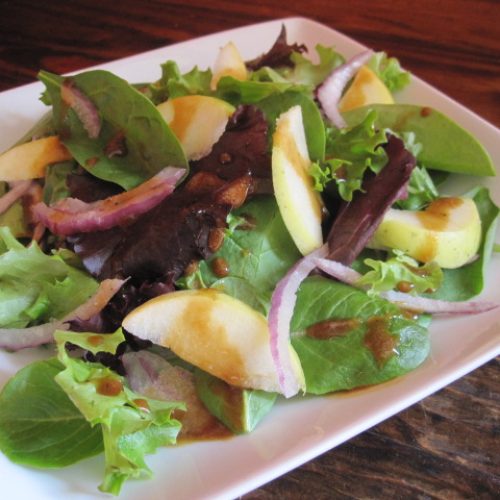
1/3 cup olive oil
1 tsp. minced shallot
1/4 cup Baba Yaga’s Apple Cider Syrup
2 Tbsp. finely chopped peeled apple
1/4 tsp. salt
1/4 tsp. ground pepper
Combine all ingredients in a food processor or blender. Blend until smooth.
Serve over salad greens with sliced red onion and thin wedges of apples, or your favorite salad.
Forget about molasses — apple cider syrup adds outstanding flavor to our favorite picnic food. This recipe will make about 6-8 servings as a side dish.
1 lb. dried beans (California pea, Navy, Great Northern)
1/4 teaspoon baking soda
1/2 cup Baba Yaga’s Apple Cider Syrup
4 Tablespoons sugar
1 teaspoon dry mustard
1/2 teaspoon ground ginger
2 teaspoons salt
1/4 teaspoon black pepper
1 medium onion, cut in half from top to bottom
1 large, firm apple, peeled, cored, and diced into small pieces
Soak the beans overnight in enough water to cover them by 2 inches. The next day, drain them and place in a pot with the baking soda plus enough water to cover by 1 inch. Bring to a boil, then reduce the heat and simmer, uncovered, for 20 minutes, skimming any foam off as needed. Remove 1 cup of cooking water and set aside. Drain and rinse the beans, then place in a bean pot or slow cooker with onion halves.
Combine the syrup, sugar, mustard, ginger, salt and pepper. Gradually stir in the reserved cooking water. Pour over the beans and onions. Bake, covered, at 300 degrees in the bean pot, for 6-7 hours, or until done, stirring occasionally. A slow cooker will take about 6 hours, still covered and stirring occasionally. Add the diced apple during the last hour of cooking. If saucier beans are desired, add small amounts of water as needed.
*This apple beer, or graf, recipe is a work in progress from beermaking novices! Feel free to experiment and make it your own! This recipe will make about 2.5 gallons of apple beer. You will need jars or other containers to bottle your beer. We use about 10 quart jars.
5.5 g Nottingham yeast
0.25 lbs Crystal 60L
1/2 oz. torrified wheat
2.5 gal water (ended up being more like 2.75 gal because I didn’t take into account q.s.–ing the water and cider syrup)
1 lb extra light DME (I prefer amber ales and think this would make a nice one, but have to consider any caramelized flavor/color the cider syrup will add)
0.25 oz. pelleted Saaz hops
24 oz. apple cider syrup
Steep the 60L and torrified wheat in 1/2 gallon water at 155 degrees for 30 minutes.
Sparge with 1 quart water at 170 degrees.
Add DME and bring to a boil. Add hops and boil 30 minutes.
In a separate pot, add 24 oz. cider syrup to 2 gallons water and bring to a boil (just for sanitation; warm water is sufficient to blend the syrup with water).
Cool down wort to 70 degrees. Cool down syrup-water to 70 degrees.
Add both liquids to 3 gallon carboy and pitch yeast. Affix airlock with overflow tube and let sit in 64-68 degree conditions.
About two weeks later, it’s time to bottle (check specific gravity for precise timing):
Remove a cup of beer from carboy and boil briefly with 3/8 cup corn sugar. Pour into a vessel large enough to hold 2.5 gallons of beer, then siphon your beer into vessel. Siphon your beer into the sanitized bottles, jars, etc., leaving about an inch and a half of air space. Set the bottles in a warm place for a few days, then transfer to a cool, dark place for long-term storage. After a few weeks in bottles, start sampling and drink up!
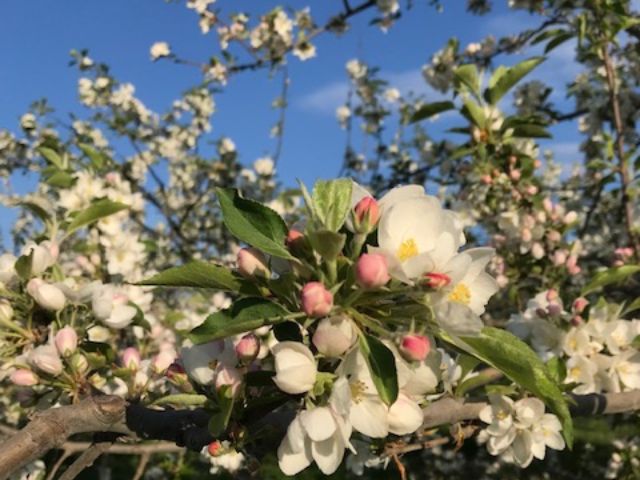

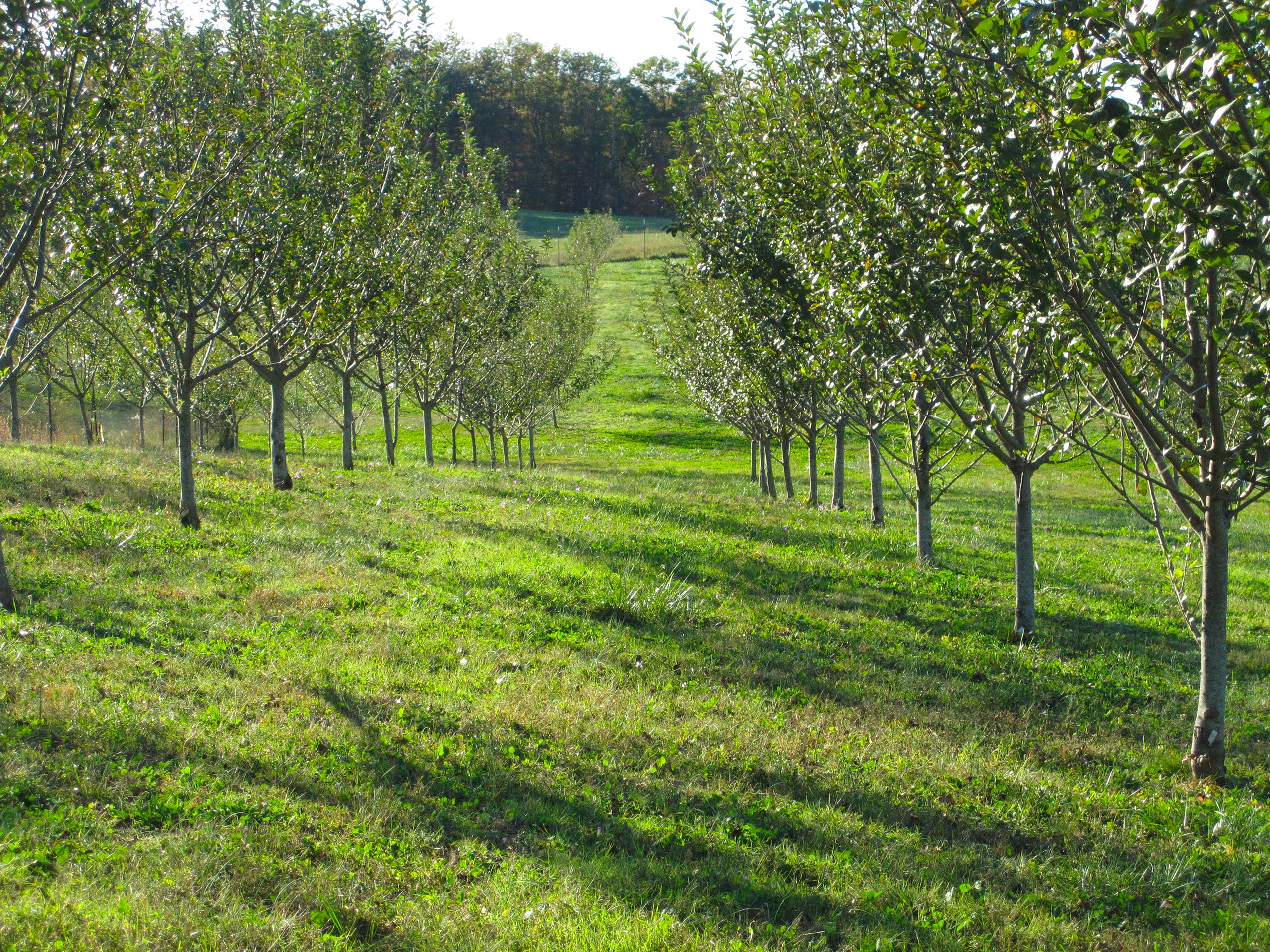

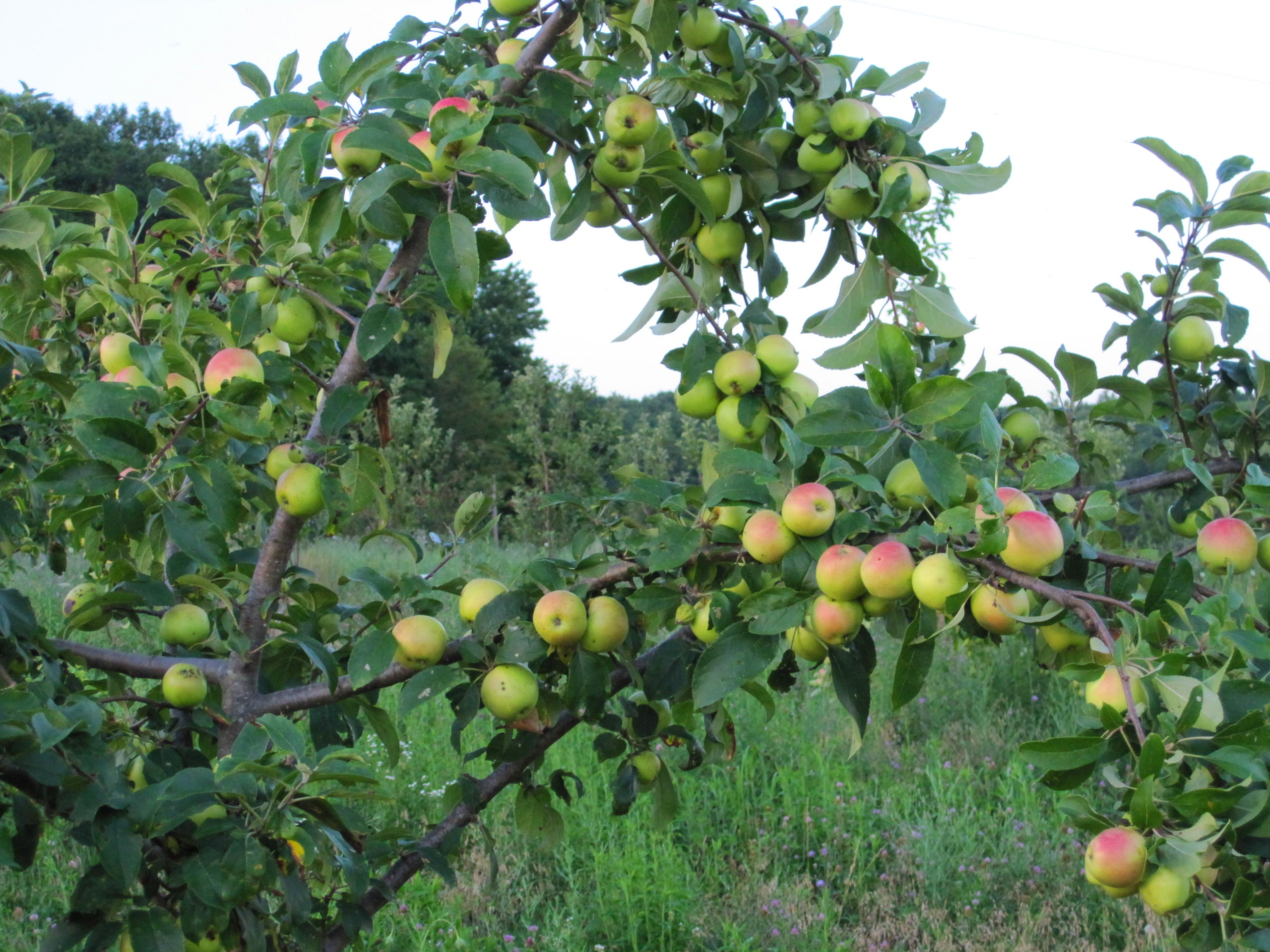


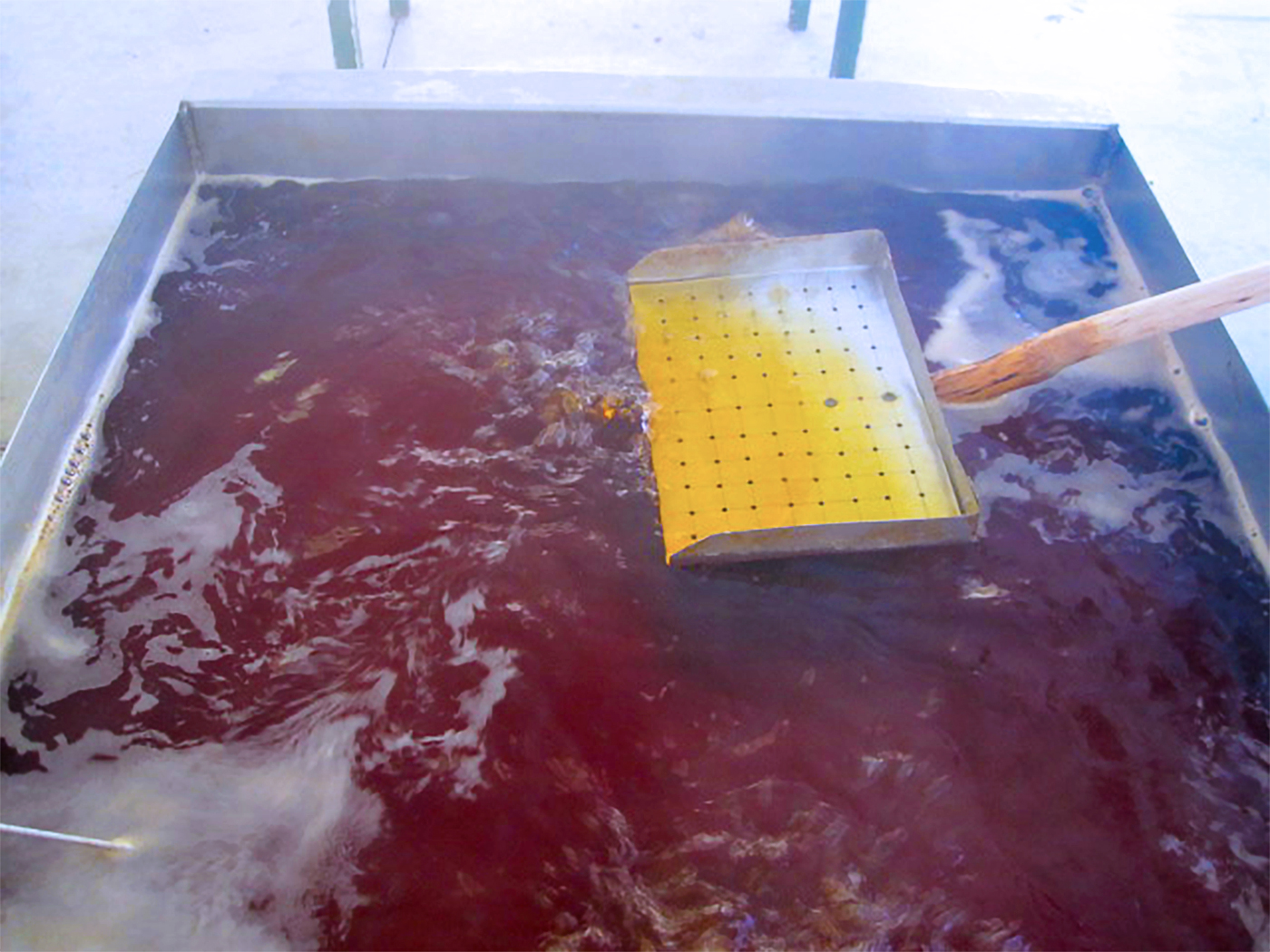
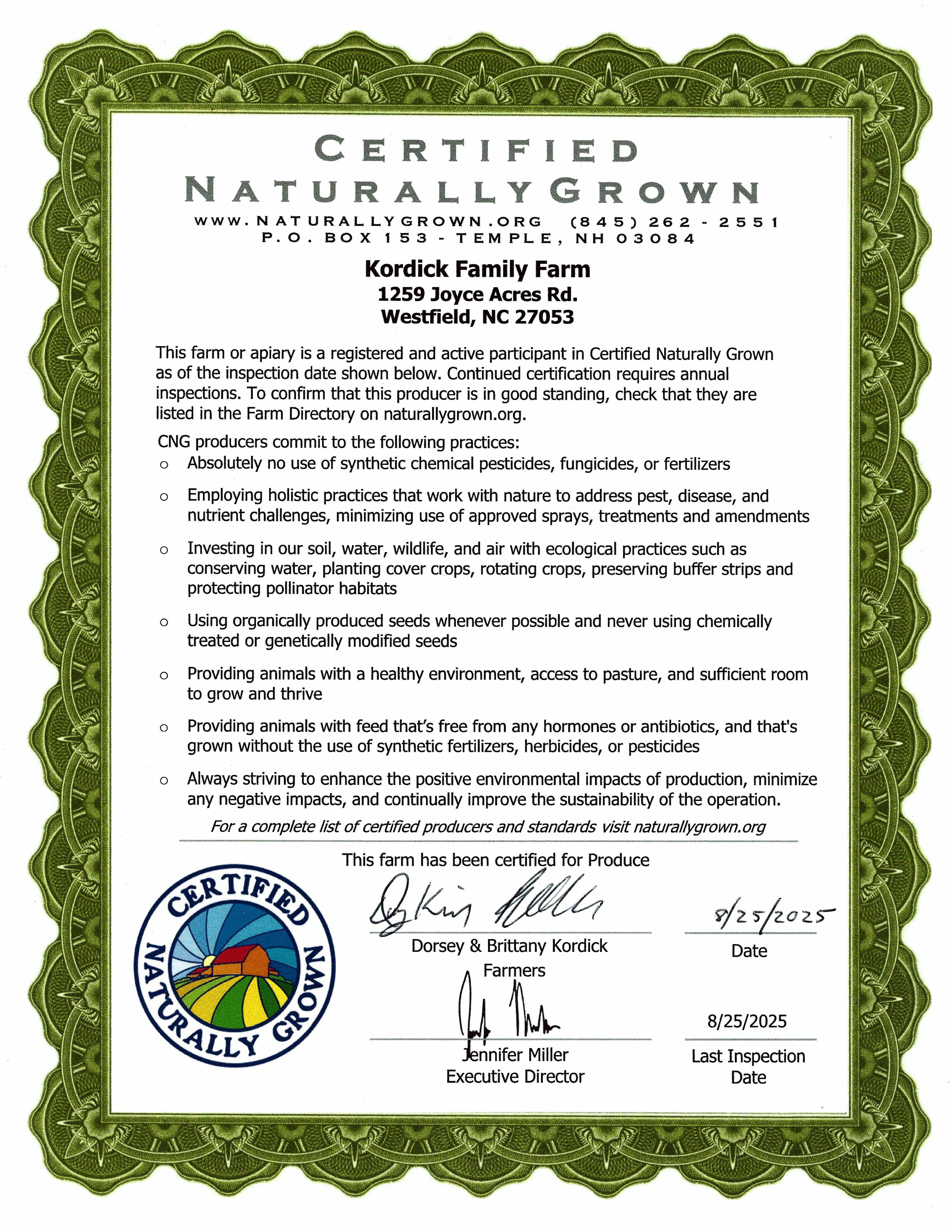


Our orchard is located at 1259 Joyce Acres Road in Westfield, NC 27053. We are currently open by appointment, for special on-farm events, and off-site festivals.
You can find many of our orchard products, including apple cider syrup, in our online Etsy store. To visit, please click here or search for the shop name KordickFamilyFarm at http://www.etsy.com.
Directions from Pilot Mountain:
Traveling on US-52 North, take the exit 134 for Pilot Mountain, NC-268. Enter roundabout and exit to the first right onto S. Key St./NC-268. Take a left at the CVS stoplight to continue on NC-268. Turn right on Old Westfield Road. After about 6.5 miles Old Westfield Road dead-ends into NC-89. Take a right onto NC-89 at the stoplight. Go 3 miles, then take a left onto Frans Road. After a mile, take a left at the stop sign to continue on Frans Road. Take the first right onto Christian Road. Take the first right onto Joyce Acres Road and travel 1 mile to reach 1259.
Directions from Francisco:
Traveling west on NC-89, take a right onto Asbury Road. At the stop sign, take a left to continue on Asbury Road. After about a half a mile, take a left onto Joyce Acres Road, and travel about a half a mile to reach 1259.